Mumbai carpenter hiring guide
Choose site carpentry or made-to-order furniture.
A fitted wardrobe and a loose sofa need different quotations. Udaybhan and Sons and SRS Interior publish site carpentry or renovation work. Amit Upholstry describes loose furniture, with sofas and dining sets in its range. Abhishek Furnishers lists woodworking and modular furniture alongside turnkey services. Mezwaru, Furniture React and FCI India also publish custom furniture work. Use each profile to confirm the advertised scope, then ask where fabrication happens and who measures, delivers and fits the finished item. A furniture catalogue does not establish availability for a small repair call.
What a carpenter does and where the job hands over.
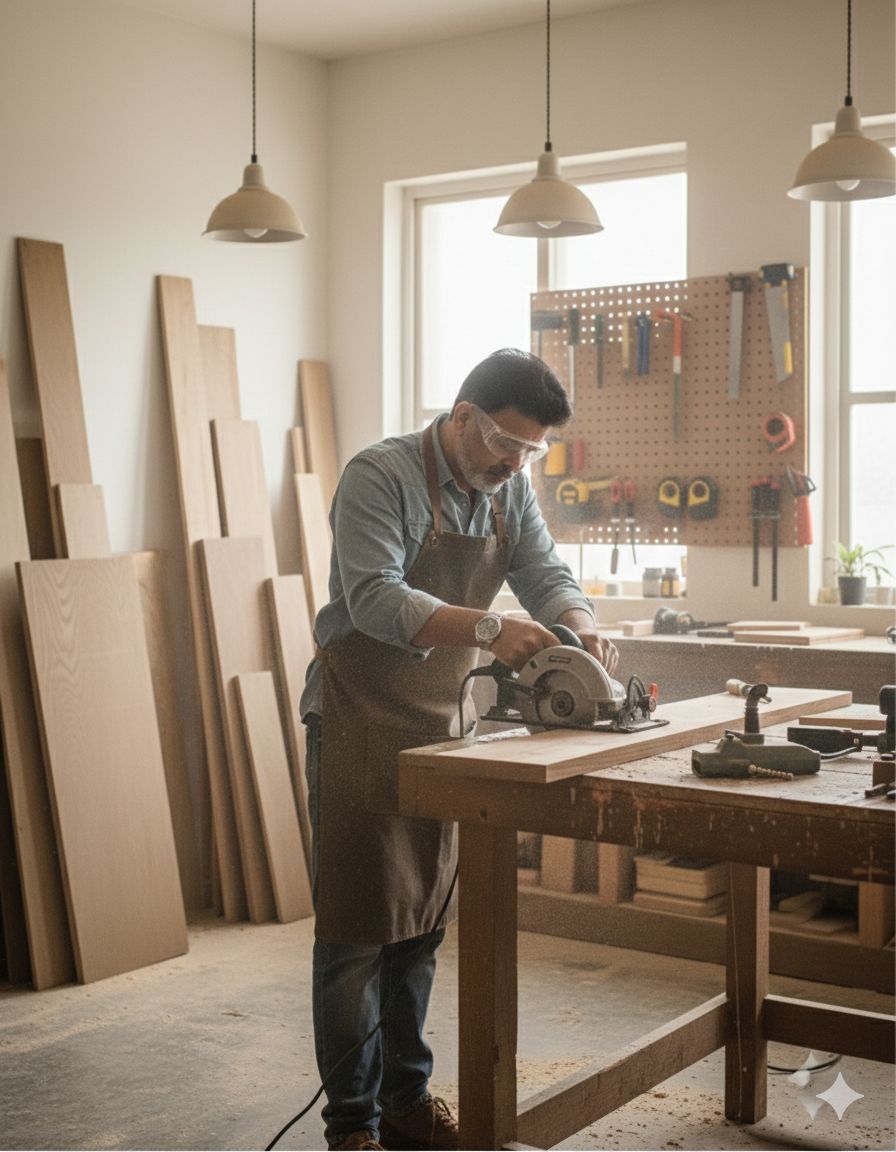
A site carpenter builds fixed woodwork inside your home. That covers wardrobes, kitchen carcasses, storage units, TV units, wall panelling, wooden partitions, doors and door frames, and loose furniture made to your drawing. The work includes cutting plywood or board, fixing laminate or veneer, fitting hinges, channels and handles, and hanging shutters. The scope ends at the wall and the ceiling. Chasing walls for wiring, fixing electrical points inside a unit, plumbing behind a kitchen carcass, false ceiling framing and final wall paint belong to the electrician, plumber, ceiling contractor and painter. Polish and PU finishing is often a separate polisher, even when the carpenter arranges it. Ask who does each of these before you agree a price, so nothing falls between two trades.
How to check a carpenter before you pay.
Visit the workshop, or the current site if the carpenter works only on site. Look at cut edges, joints, the underside of shelves and the inside of drawers, since those places show real habits. Ask for two finished homes you can see in person, and speak to those owners about delays, changes and repairs. For a firm, ask for the GST number and check that the trade name on the quotation matches the name on the registration. For an individual carpenter, take a copy of an identity document and a local address, and record the mobile number that will be used for payment. Confirm who will actually be on your site each day, because the person you meet may sell the job and then hand it to a team you have never seen.
What a proper carpentry quotation contains.
A usable carpentry quotation prices each unit separately, with its size in square feet or running feet and a note of which method applies. Sheet-based quotes should state the unit basis, the number of shutters and drawers, and whether internal shelves and back panels are counted. For each item it should name the plywood grade, the laminate or veneer brand and thickness, the hardware brand, and the finish for inside surfaces. It should list what is included, such as edge banding, handles, locks, soft-close hinges and transport, and what is excluded, such as glass, mirrors, lights, polish and civil repairs. Look for a stated allowance for wastage, the tax treatment, the warranty period for hardware and workmanship, and payment stages tied to visible progress rather than dates.
Frauds that show up in carpentry work.
The common losses in woodwork are quiet substitutions. A quotation names a boiling water resistant grade of plywood, and a cheaper commercial or low-density board arrives with a similar face. Sheets carry a brand stamp on one face only, or carry no stamp at all, so ask for the stamp on every sheet and photograph it before cutting. Running feet measurements grow when the carpenter measures every shelf, partition and back panel separately without telling you the method up front. Laminate and veneer brands get swapped for a look-alike sheet from a different maker. Hardware is quoted as a known brand and fitted as an unmarked copy, so open a box on site and compare the packaging. Ask for one sample of every material before work starts and keep it.
Hire the carpenter directly or through a contractor.
Hire a carpenter directly when the woodwork is the whole job, such as new wardrobes in an otherwise finished flat, and when you can be on site to take decisions. You then pay less for coordination, but you become the person who orders material, checks quantities and sorts out clashes with the electrician or painter. Go through an interior or turnkey contractor when woodwork must meet false ceilings, electrical points, plumbing and stone tops, because those interfaces cause most disputes. The contractor then holds the warranty for the finished unit, and the contractor pays if two trades damage each other's work. Either way, ask who replaces a warped shutter after a year and get that answer in writing.
Sequence, dependencies and what to inspect during the work.
Woodwork starts after civil work, waterproofing and plaster are complete and the walls are dry. Electrical conduits and points inside units must be marked and run before carcasses go up, or the electrician will cut through finished panels. Check the site at three points. When material arrives, count sheets and photograph every brand stamp and grade mark. When carcasses stand in place, check that they are level and plumb, that back panels are fixed, and that there are no gaps at the wall. Before laminate covers the frame, photograph the internal structure and the thickness of each panel. Keep these photos with the quotation, because they are the only proof of what went in once the unit is closed.
Payment, handover and warranty closure for carpentry.
Tie each payment to something you can see. A modest advance secures the date and material order. The next payment follows the arrival of plywood and hardware on site, checked against the quotation and photographed. A further payment follows carcass installation. Hold the final payment until every shutter, drawer and channel has been opened and closed by you, edges are sealed, and the snag list is closed. At handover, collect the original material bills, the hardware warranty cards, the spare laminate and edge banding, and a written statement of the workmanship warranty with the trade name, mobile number and date. Keep the sample pieces you approved at the start next to the final bill.
 Image via official site